

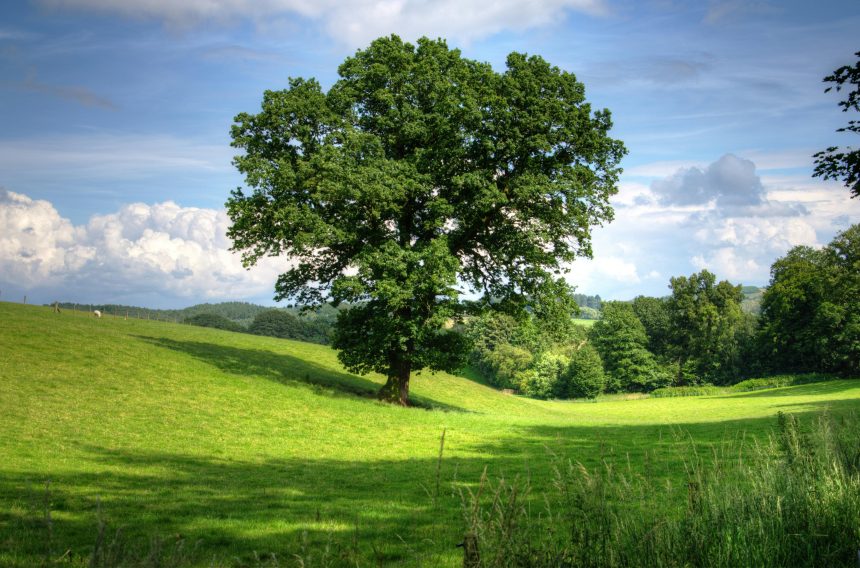
There are so many ways in which we benefit from trees. Trees provide wood, something we use so often in our day-to-day lives. Many types of furniture, such as tables, chairs, closets, and bookshelves, are all made out of wood—not to mention paper, a byproduct of wood. We are always using paper: newspapers, sefarim, and notebooks all originate from trees.
Furthermore, trees provide shade. On a sunny day when we are outdoors, just sitting under a tree is extremely refreshing. Wood is also used for fuel. Coal, often used in BBQs, originates from wood. Furthermore, trees are an important part of the ecosystem. They take in excess CO₂ and give out oxygen for us to breathe. All of these are in addition to the fact that they produce delicious fruit.
Since we gain so much from trees, the Torah commands us to treat them with respect. Our Parashah discusses that when the Jewish armies besiege the enemy’s cities, there is a mitzvah not to cut down any fruit trees (20:19). The reason behind this mitzvah is simple: trees are part of Hashem’s creations, and there is so much we can benefit from them. We need to express our appreciation for them and shouldn’t just cut them down. Each tree is an incredible gift from Hashem and performs so many miraculous processes. Just looking at them and contemplating their wondrous properties helps strengthen our emunah.
One time, a man asked Rabbi Shlomo Wolbe what inspiring emunah sefer he recommended. Rav Wolbe responded, “Really every tree you look at is an emunah sefer—do the branches sprout by themselves…?”
The Mefarshim explain that this is in fact a mitzvah which applies to all generations, and not only to fruit trees: really, we are not supposed to unnecessarily destroy or waste anything. Chazal (Shabbos 77b) teach that everything Hashem created serves a purpose; nothing was created unnecessarily. Even the smallest fly and tiny leaf was created for a reason. Each detail in Hashem’s world bears testimony to His greatness and intricate involvement in our lives and performs a unique function. This is alluded to in the verse, “The world is full of Your possessions (kinyanachah)” (Tehillim 104:24).
The word kinyan in this context is normally translated as possession. However, the literal translation of kinyan is “to acquire.” So, David Hamelech is telling us how each detail of Hashem’s creations serves as a means for us to acquire greater knowledge of Hashem! (Rav Simchah Bunim of Peshischca)
As Rav Yerucham Levovitz writes: “The entire existence of the Creation all calls out in the name of Hashem… each tree, each blade of grass, all call out and publicize the name of the King of Kings.” (Daas Hochmah U’Mussar vol. 2 p.83)
So, for sure we shouldn’t waste Hashem’s creations. Everything in the world is here for a reason and is full of such complete wisdom bearing testimony to His greatness. In fact, the Sefer HaChinuch (529) writes that the Tzadikim are so meticulous about this practice that they are careful not to waste even a mustard seed!
Focusing on Hashem’s great wisdom is a prerequisite to the fundamental mitzvah of loving Hashem. As the Rambam writes: “When a person contemplates Hashem’s handiwork and phenomenal creations, he will observe wisdom that has no bounds. This will bring him to love and praise Him, with an intense longing to know Him.” (Yesodei HaTorah 2:2) Rav Shach notes that this teaching of the Rambam is so fundamental that one should try and review it each day.
The great Gadol, Rav Mordechai Gifter, was mesmerized by the complex details of Hashem’s beautiful creations. He would frequently pick up a nice leaf and use it as a bookmark for his Gemara. This was a way for him to marvel at the beautiful intricacies of Hashem’s world before he began learning! Another practice of his was to drive with his family once a year to visit a beautiful orchard. There were over 100 species of apples, in addition to many other fruits, which grew there, causing Rav Gifter to be enthralled at Hashem’s ingenious creations. These visits inspired him so much that he would mention them in his shmuessen, discussing the great miracles of nature. Even in his older years, when it was hard for him to go on walks, his wife used to drive him through stunning natural sights, helping him witness the spectacular wonders that Hashem created. (Adapted from the biography of Rav Gifter)
In addition to bein adam laMakom, being particular about the mitzvah of not being wasteful has many long-term ramifications bein adam lechaveiro. As the Sefer HaChinuch (529) writes, it helps accustom us to cherish the great goodness that Hashem provides us with and can impact all our interactions with others. When we appreciate the good Hashem created and are careful not to be wasteful, we will appreciate the great goodness in everyone and will come to love them and to help draw them to Torah. After all, each Jew has so much inherent worth and is created in the image of Hashem. So, this mitzvah helps provide us with the mindset essential for a Torah life: appreciating the good in everything and everyone, no matter what.