

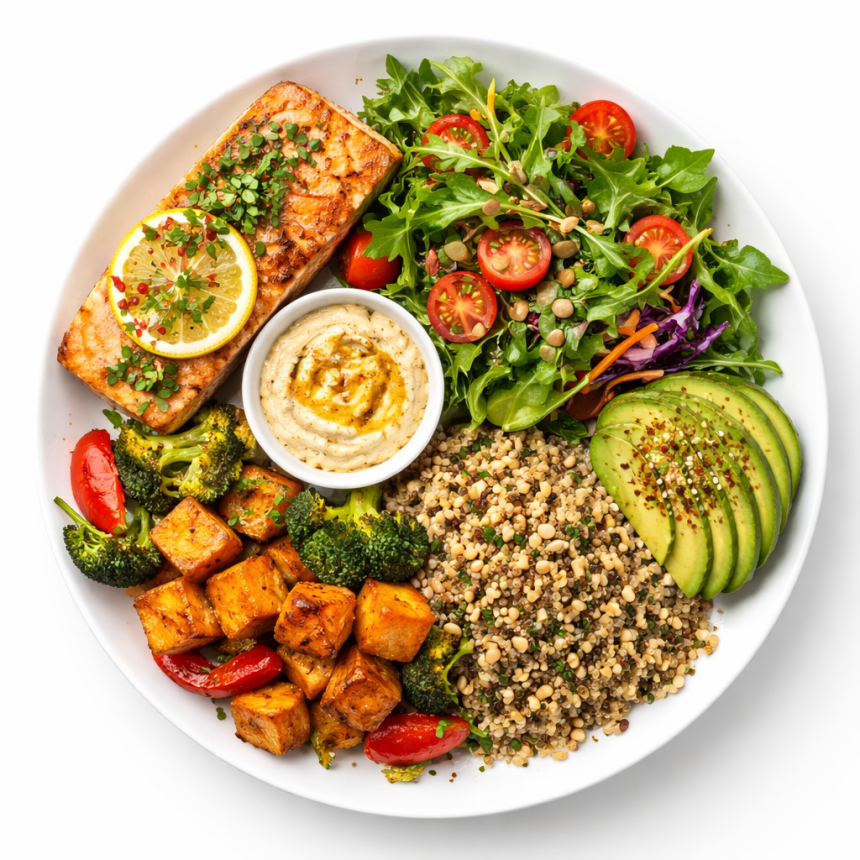
We have been handpicked by Hashem to serve as His emissaries in this world. With such a tremendous privilege comes enormous responsibility. We are not meant to live lives of blindly following our desires. Rather, Hashem gave us a Torah that guides and elevates even the most physical aspects of life, including something as basic and frequent as eating.
Our Parashah goes into great detail regarding which species of meat, poultry, and fish are permitted and which are not. Interestingly, immediately after this list, the Torah declares, “I am Hashem your G‑d, Who elevates you from the land of Egypt to be a G‑d for you; you shall be holy, for I am holy” (Vayikra 11:45). There are many places where the Torah refers to our redemption from Egypt, yet this is the only place where it uses the expression that Hashem “elevates” us. Why specifically here, in the context of food? And why, after teaching us what we are permitted to eat, does the Torah immediately command us to become holy?
Rav Shimshon Pincus explains that Hashem, in His immeasurable love, did not merely create food as a means of survival. He could have sustained us with something simple and tasteless, a pill containing the nutrients we need to live. Instead, Hashem lovingly filled the world with an endless array of delicious foods, each with its own texture, taste, aroma, and color.
Rav Pincus writes that when we eat, it is actually like receiving a kiss from Hashem. This is a breathtaking way to view something so ordinary. Every bite becomes an expression of Divine love. Every meal is a reminder that Hashem is not only sustaining us, but showering us with kindness, warmth, and care. When we eat, we should pause and contemplate this. The food before us is life itself, lovingly placed in our hands by Hashem. It gives us strength, energy, and the ability to continue serving Him.
Rav Pincus teaches that in our world, one of the greatest ways to tangibly feel that life is being given to us directly from Hashem is through eating. Therefore, the time of eating can become a moment of deveikus, a time of genuine closeness to Hashem.
Chazal (Yevamos 20a) teach, “Kadesh atzmecha b’mutar lach” — a person should sanctify himself even within that which is permitted. The message is profound. Holiness is not found only in abstinence; it can be found precisely within the boundaries of what is allowed. A person may eat food prepared with the highest standards of kashrus, yet if it is consumed in a gluttonous or unrefined way, the spiritual opportunity has been lost.
On the other hand, the very same food can become a vehicle for holiness when it is eaten with contemplation and appreciation. This is why, specifically in the context of permitted foods, the Torah speaks of Hashem elevating us. The physical act of eating itself contains the power to lift us spiritually when approached with holiness. Through this, the command “You shall be holy” becomes not an abstract ideal, but something we can live every single day (Nesivos Shalom, Shemini).
How do we transform eating into a spiritually uplifting experience? Through appreciation. Eating with appreciation is so fundamental that Chazal instituted that we recite a berachah before we eat. A berachah is far more than a ritual formula. The Pele Yoetz explains that reciting a berachah actually draws a special holiness onto the food itself.
Rav Pincus notes that people often assume we only encounter Hashem in the Beis Medrash, yet he teaches that we must remember we also encounter Him at the table. As the pasuk says, “Zeh hashulchan asher lifnei Hashem” — “This is the table that stands before Hashem” (Yechezkel 41:22). In Rav Pincus’s moving words, there is almost nothing that helps us feel close to Hashem as much as eating can. This is truly astonishing. We eat many times throughout an average day, and every one of those moments carries within it the potential for closeness, gratitude, and holiness.
At the same time, food also carries a danger. If approached improperly, the very gift that can elevate us can also distance us. The pasuk warns, “And Yeshurun became fat and kicked,” describing how abundance can cause a person to forget the true Source of his blessings and begin to attribute everything to his own efforts. This is the subtle trap of the yetzer hara: to make constant gifts feel ordinary.
Our avodah is to resist that pull and remain awake to the truth that every bite is a gift, every flavor is kindness, and every meal is an opportunity to draw nearer to Hashem. Perhaps one of the most practical ways to preserve this awareness is through the way we say our berachos. When a berachah is recited slowly, clearly, and with feeling, it transforms the act of eating into an act of connection. It frames the entire experience with awareness and gratitude, allowing the holiness within the food to fully emerge.
This lesson was lived with extraordinary consistency by the Manchester Rosh Yeshivah, Rav Yehudah Zev Segal. He was meticulous about reciting every berachah from a written text that he carried with him at all times, and he adhered to this practice throughout his life, even in his final years. When he wanted to recite Asher Yatzar in the middle of the night, he would turn on the light to read the blessing. On Shabbos, if the light was off, he would descend a full flight of stairs just to maintain the practice of reciting every berachah from the written words.