

Can we imagine awakening one morning to find our sustenance waiting for us—not in the kitchen, not in the fields, but descending gently from Shamayim itself? Food that requires no effort, no preparation, no toil—imbued with Divine nourishment and sustained entirely by Hashem’s will.
For Klal Yisrael in the midbar, this was not a thought experiment. It was their daily reality.
Surrounded by a vast and unforgiving desert, the people feared for their survival. How could an entire nation—hundreds of thousands strong—be sustained in such a desolate wasteland? Their anxiety led them to cry out to Moshe and Aharon, convinced that there simply was not enough to eat. Hashem reassured them that their sustenance would come directly from the Heavens.
And so it did.
When they awoke the next morning, they beheld a delicate layer of man covering the ground, like a radiant white blanket. This extraordinary food contained everything they needed to live. No planting, no harvesting, no labor—only trust. It was an open, undeniable miracle.
Chazal teach that in response to witnessing this Divine kindness, Moshe Rabbeinu instituted the first berachah of Birkas Hamazon—hazan et hakol—as an expression of gratitude to Hashem (Berachos 48b).
Yet this raises a powerful question. If this berachah was established in response to the miracle of the man, why do we continue to recite the very same words today? After all, only Klal Yisrael in the desert experienced food falling directly from Shamayim.
Rav Shimshon Raphael Hirsch offers a profound insight. He explains that every piece of food we eat is no less a gift from Hashem than the man itself (Devarim 8:10). Though our food appears natural—grown, harvested, and prepared—its very existence, nourishment, and sustaining power are no less miraculous.
The man descended from Shamayim containing precisely what Klal Yisrael required. In every generation since, Hashem continues to sustain the world in the same way. Food is essential to life, and in His boundless mercy, Hashem ensures that every creature receives its sustenance. As we proclaim in Birkas Hamazon, He is the One who sustains the entire world with goodness, grace, kindness, and mercy.
Hashem could have created a single pill containing all the nutrients necessary for survival. Yet, in His infinite love, He chose otherwise. Instead, He filled the world with an astonishing abundance—countless varieties of food, each with its own texture, flavor, and beauty, created not only to nourish us, but to delight us.
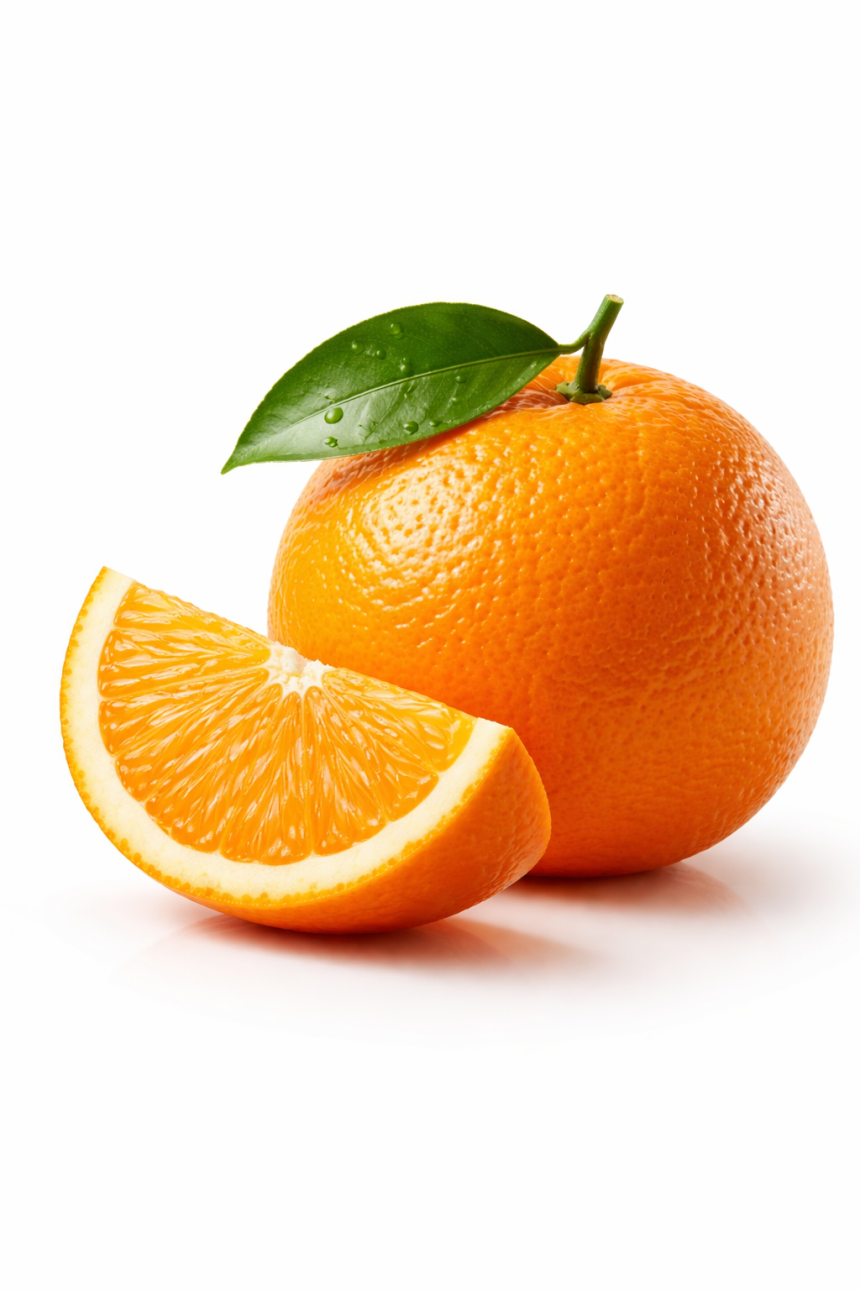
Consider fruit alone—hardly a primary source of sustenance—and yet there are over two thousand varieties. Each is crafted with remarkable wisdom. Take an orange, for example. It is encased in a thick, watertight peel that protects the delicate fruit within. Its vibrant color draws the eye, and it contains a high concentration of vitamin C, ideally suited for the winter months, when the body needs it most. Nothing is random. Everything is exact.
Rav Yerucham Levovitz once stood before a large group of talmidim and asked one of them to bring him the Ma’aseh Elokainu that was resting on the table. The talmid searched but returned empty-handed.
“I couldn’t find it,” he said.
“It is there,” Rav Yerucham replied. “Please go and bring it.”
The talmid returned holding an orange. “I couldn’t find a sefer called Ma’aseh Elokainu,” he explained. “All I found was this orange.”
“This is exactly what I meant,” Rav Yerucham said.
He slowly peeled the orange, speaking about how much there was to learn from this Ma’aseh Elokainu—this act of Hashem. He opened it, marveling at its intricate design. With deep feeling, he inhaled its fragrance and recited the berachah Hanoten rei’ach tov bapeirot. He then joyfully recited Shehecheyanu and Borei peri ha’etz, tasted the orange, and savored every bite.
“Wow,” he exclaimed, “this truly is Ma’aseh Elokainu.”
Appreciating the wonders of the food we eat is always important. But Tu Bishvat is a particularly powerful time to cultivate this awareness. The widespread custom of eating many kinds of fruit on Tu Bishvat is not merely symbolic. Rav Leibele Eiger explains that it is meant to awaken our appreciation for the delicious fruits Hashem created for us.
Tu Bishvat marks the moment when the sap begins to rise anew within the trees, making it an especially fitting time to reflect on their vitality and purpose. Hashem wants us to enjoy His creations. When we pause on this day to admire the intricacy, beauty, and taste of fruit, it brings Him great nachat ruach. In response, abundant shefa is drawn down into the world, bringing blessing and plenty (Toras Emes, Beshalach).
Remarkably, this idea is even hinted to in the gematria of the day itself. The gematria of Chamishah Asar Bishvat is 1234—the same as the phrase:
“Zeh yom lehodot al kol minei peri ha’etz”
“This is the day to give thanks for all the fruits of the tree.”
May Tu Bishvat inspire us to recognize that every bite we take is nothing less than a miracle—a taste of the man from Shamayim.