

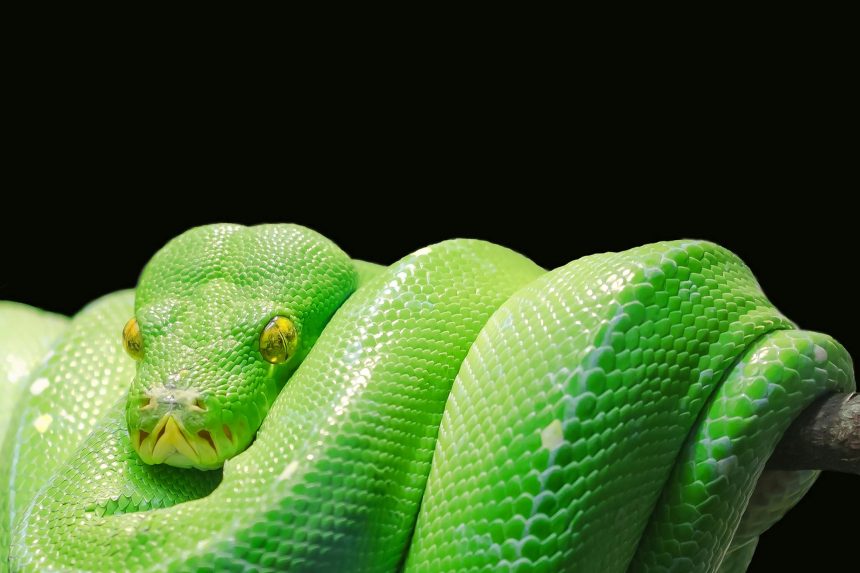
The mannah was an incredible miracle. It fell straight from Shamayim with no effort and tasted like whatever the people desired. Yet, despite its wondrous properties, Bnei Yisrael complained. Their ingratitude brought about a terrifying punishment: an outbreak of deadly snakes. But why snakes specifically? And why was healing brought about by looking at a copper serpent raised by Moshe?
Rabbi Shimshon Refael Hirsch offers a powerful insight. Normally, the wilderness is full of dangerous snakes. Yet throughout their journey, Hashem protected the people from this threat. It was only when they complained and lost that sense of gratitude that this protection was withdrawn. The snakes had always been there; Hashem had simply been shielding them. The Torah uses the phrase וישלח ה’ בעם את הנחשים השרפים—“and Hashem released the fiery serpents.” Rav Hirsch points out that the word וישלח implies that the snakes weren’t newly created or summoned—they were just let loose. These were the very same snakes that had always been there but hadn’t been allowed to harm them until now.
This reveals a deeper layer to their punishment. It wasn’t just about the pain of the snake bites—it was a wake-up call. The very danger they were now suffering had always been lurking around them, and it was only due to Hashem’s constant kindness that they had been safe. Their complaint came not from lack, but from blindness to how much they were already receiving.
This context gives new meaning to the copper serpent Moshe raised. It wasn’t just a remedy; it was a lesson. Looking up at the serpent reminded them that they were always surrounded by potential danger, and every moment of safety had been a miracle. It was a call to awaken their appreciation. Suddenly, even something as basic as breathing became a source of wonder. Each breath was a gift from Hashem, something they had taken for granted until now.
Rav Hirsch writes that a person doesn’t need to win the lottery or possess extraordinary talents to feel fortunate. Just being alive, healthy, and able to experience the world is the greatest treasure. Hashem is constantly giving to us—sustaining us, healing us, protecting us—even when we don’t realize it.
This message still rings true today. We’re constantly being protected, even in ways we don’t see. Every breath we take is a reminder of Hashem’s kindness. As Chazal teach in Bereishis Rabah (14:11), “For each and every breath, one must praise Hashem.” The fact that we’re alive, breathing freely, and functioning is nothing short of miraculous.
There’s a story of an 87-year-old man who was hospitalized with a breathing condition. He was put on a respirator, and after two weeks, Baruch Hashem, he recovered. The hospital informed him that the cost for his treatment was ten thousand dollars. The man began to cry. Seeing how distressed he was, the staff quickly offered to reduce the cost. But he wasn’t crying about the bill. He explained that he had just realized how incredible the gift of breathing was. For two weeks on a machine, it cost ten thousand dollars—yet all his life, Hashem had allowed him to breathe effortlessly and for free. It overwhelmed him with gratitude.
That story captures the essence of what Bnei Yisrael were meant to learn in the desert—and what we’re meant to internalize every day. The gift of life, breath by breath, is something truly priceless.