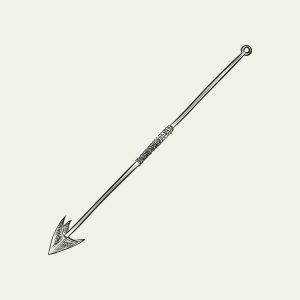
Pinchas acted with astounding mesiras nefesh to defend Hashem’s honor. His action wasn’t popular: yet that didn’t stop him. Kavod Shamayim was his only concern. For this, he was greatly rewarded with the great privilege of Kehuna for him and his descendants. This reward was midah keneged midah. Since he defended Hashem’s honor, all his descendants were rewarded with the special honorable status of being Kohanim (Ohr HaChayim).
Rashi (Bamidbar 25:12) explains that Hashem wanted to express His tremendous gratitude to Pinchas for defending His name and thus stopping the plague. Lehavdil, when someone is benefited by his friend, he will do something to express his appreciation for the favor. So too Hashem expressed His gratitude to Pinchas. The source for this is the verse in Shmuel I (2:30), “Those who honor Me, I will honor.” Rashi explains that this specifically refers to Pinchas, who was rewarded for defending Hashem’s honor. Rabbeinu Yonah (Avos 4:1) explains that all the kavod in the world belongs to Hashem, so by the letter of the law, Hashem does not need to show appreciation for this. Yet, Hashem doesn’t go by the ‘strict letter of the law’ and extremely appreciates and highly rewards those who stand up for kavod Shamayim.
We learn from Pinchas that when one acts with self-sacrifice, with determination to do what is right despite social pressure, it is strongly appreciated by Hashem and he will be greatly rewarded. This is especially true for those who faithfully observe Torah and mitzvos in our challenging generation. The Arizal teaches that even a small mitzvah in our generation is equal to many great mitzvos performed in other generations, as we have many more negative temptations to withstand! (Shivhei Rav Chaim Vital)
We also see this idea when Yaakov discovered that his beloved son Yosef was still alive. He exclaimed, “I shall go and see him before I die” (Bereishis 45:28). The Chafetz Chaim asks, why was Yaakov so insistent that he see Yosef before he died? Surely, he would see him in the next world? He answers that Yaakov knew that Yosef was on such a high level, having survived the temptations of Egypt, that he was concerned that maybe he would not merit to see him in the next world.
Adding onto this idea, Rav Yerucham Levovitz (Daas Torah 4 p.147) teaches that the later generations will be more worthy to greet the Mashiach than earlier ones, and those who diligently apply themselves to Torah study are greater than the Gedolim of previous generations! When we stay strong through observing the Torah and keeping mitzvos despite social pressures, we cannot fathom how much Hashem appreciates this. Each time we avoid speaking lashon hara, each time we avoid looking at something we shouldn’t — these are actions that are immeasurably priceless and cherished by Hashem.
The Chafetz Chaim used to travel to different cities in Eastern Europe, selling his many works. One time, when visiting Vilna, he went to a certain inn. He noticed a well-built man who seemed to lack basic etiquette lift up an entire hen and stuff the whole thing into his mouth, followed by drinking a large cup of beer in one shot. Although many would have been put off by such unrefined behavior, the Chafetz Chaim gently approached him and endearingly shook his hand. ‘I understand that you were conscripted into the Russian army yet remained a practicing Jew,’ he told him lovingly. “What incredible merit you have! Still keeping your faith after such conditions. Oh, I only wish I will be guaranteed a place like yours in the World to Come. You have experienced stronger challenges than our Sages did. How incredible!” These words sincerely touched the soldier’s heart, and he became a talmid of the Chafetz Chaim and eventually an outstanding Torah scholar. (Adapted from The Power of Teshuvah, Rabbi Heshy Kleinman, p. 77)*
This idea is also very relevant for the meaningful period of the three weeks. It is the summer, and this time could be difficult to connect to, not to mention all the restrictions we have. We need to internalize how much value our mourning has and how beloved it is to Hashem that we feel His pain. The Chasam Sofer teaches that our mourning and tears actually builds the bricks for the third Bais Hamikdash. Each time we refrain from listening to music or a hot enjoyable shower, we are building another brick in the Bais Hamikdash!
The three weeks are actually a great time to get close to Hashem. This is alluded to in the verse in Eichah, כל רודפיה השיגוה בין המצרים (1:3) where the Midrash teaches refers to the period between Shivah Asar BeTamuz and Tishah Be’Av. The Maggid of Mezrich notes that the word רודפיה can be read רודף קה — pursuing after Hashem. So the verse can be read, anyone who pursues after Hashem will achieve this during the bein hametzarim!
May we be zocheh to make the most of this meaningful time and to celebrate Tishah BeAv as a Yom Tov this year!
Complied by Daniel Shasha, to recive our weekly Devar Torah by email: livingappreciation@gmail.com